
Fire as Monster and Mastery
The Reincarnationist PapersFire changes from an uncontrollable childhood disaster into Evan’s chosen ritual, then becomes the means by which he tries to explain himself to the Cognomina.
increasing Bearing strength in each event
 decreasing
Bearing strength in each eventdecreasingThe First Encounter
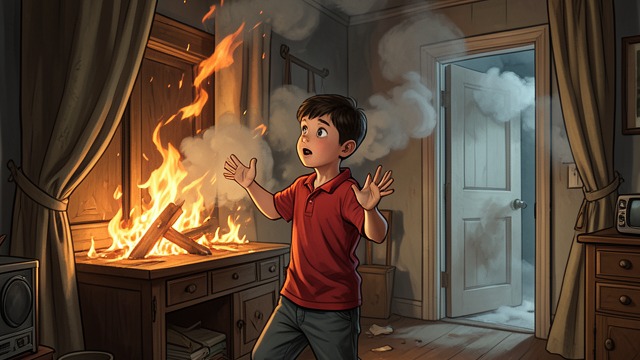
The First Encounter
Curiosity meets flame
Bobby lights a match to inspect his toy tower and watches the fire rather than recognizing its danger. The flame jumps from the structure to the room before he can understand what has happened.
Control disappears
The fire spreads through curtains, carpet, and walls, cutting off the exit. Bobby calls for his mother and then watches her enter the burning room.
A trauma fixed in memory
The event becomes one of the strongest memories Evan inherits. Its vividness makes fire more than an object; it becomes a remembered presence that continues to demand attention.
A Monster Named
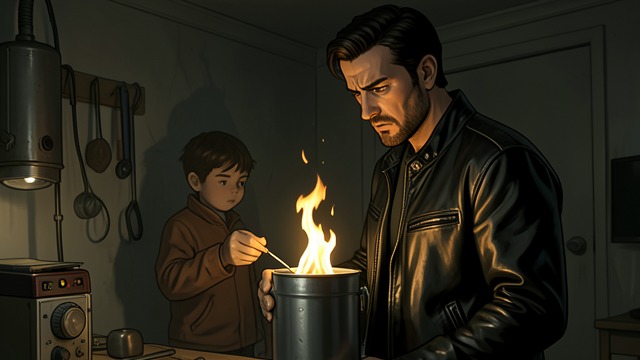
A Monster Named
Flame given agency
Evan describes the fire as a monster that runs through a room and searches for the boy he remembers. His language turns a physical force into an apparent witness to the past.
Mastery as repetition
He repeatedly summons fire to prove that he can control what once overwhelmed him. The ritual promises agency, but each repetition keeps the original fear active.
Danger outside the self
Evan’s private confrontation affects property and other people. The metaphor helps explain his behavior without removing the harm it causes.
A Lighter Passed On
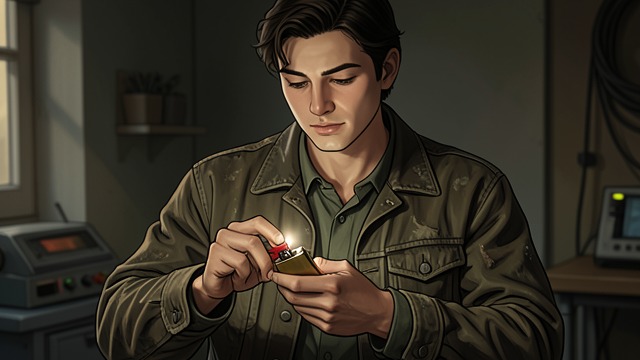
A Lighter Passed On
A mother’s gift
Judith gives Evan a Russian military lighter during a quiet farewell. He accepts it as a keepsake even though they cannot reconcile their differing views of his memories.
A tool becomes symbolic
Evan uses the lighter to start his first barn fire and later keeps it through his years of arson. The object connects maternal affection to the behavior that separates him from ordinary safety.
Love and danger coexist
The lighter is not simply a symbol of rebellion or a practical tool. It carries care, memory, and destruction at once, reflecting Evan’s difficulty separating what he loves from what hurts him.
The Warehouse Reenactment
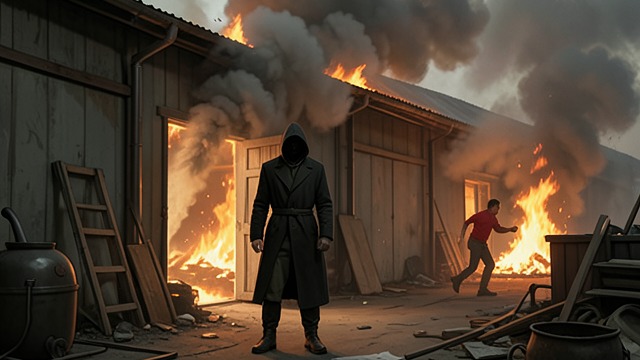
The Warehouse Reenactment
A job becomes a memory site
Evan prepares the warehouse fire with deliberate care, but Bobby’s death returns as the blaze develops. The commercial task and personal reenactment overlap.
The witness becomes the arsonist
Evan calls himself a ghost in the burning room, recognizing that the fire is for the child whose terror he carries. The description reveals that the act is not only profit-driven.
Escape does not settle the past
Evan gets away from the flames but is shot by police. The danger of the present cannot erase the memory that prompted the fire, and the incident leads directly to Poppy’s intervention.
Fire Explained at Ascension
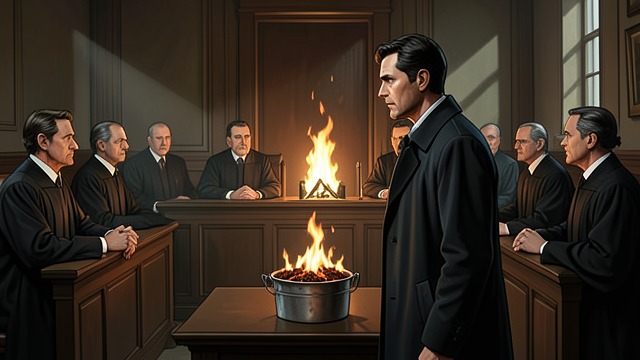
Fire Explained at Ascension
The judges ask beyond facts
The Egyptian judge presses Evan to explain what fire means to him rather than recount a single incident. Evan recognizes that he is being asked to make his inner life understandable.
A relationship acknowledged
He describes fire as both enemy and confidant, a recurring presence that remembers him and lets him test whether he has changed. The answer links his compulsion to the childhood he cannot forget.
Understanding without excuse
The testimony reveals why Evan repeats arson, but it does not justify endangering others. By naming the pattern, he begins to treat it as part of his responsibility rather than as an uncontrollable mystery.
During Bobby’s final night
During Evan’s first Los Angeles fires
Before Evan leaves Minnesota
The night Evan burns Lynnman Warehouse
At the final session before Evan’s vote
